
Supreme Court Likely to Deliver Verdict in Sabarimala Young Women Entry Case Before December 18
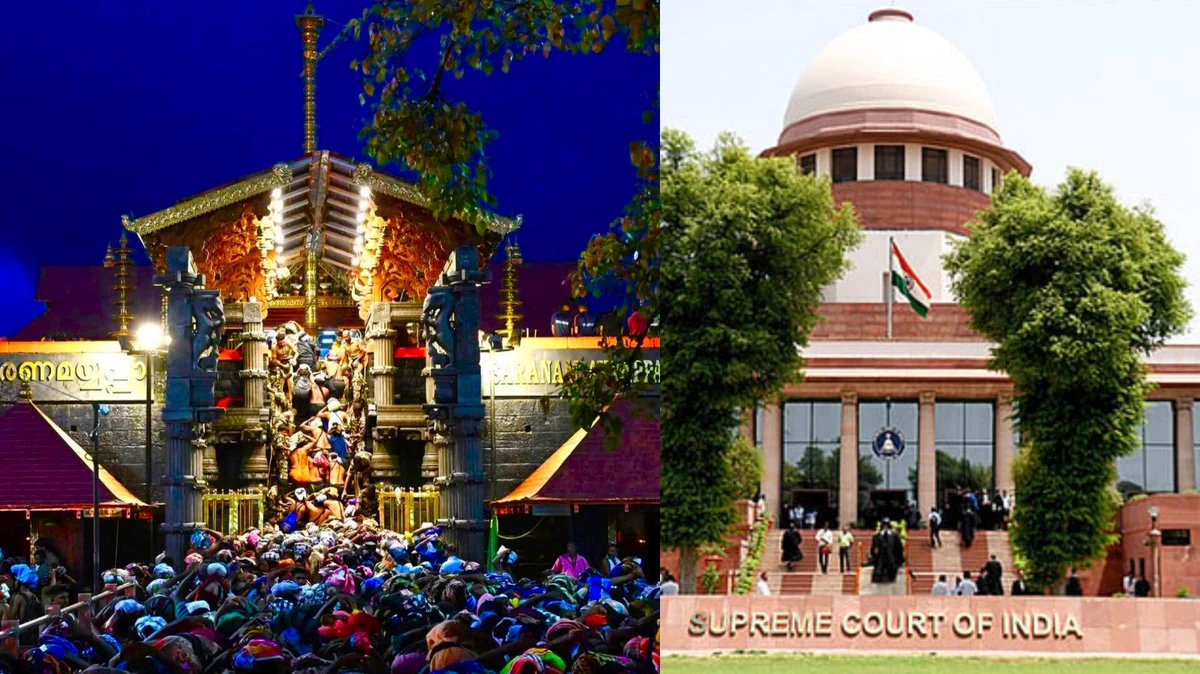
The Supreme Court is expected to deliver its verdict in the long-pending Sabarimala young women entry case before December 18, ahead of its Christmas vacation. An indication to this effect emerged from an observation by Justice BV Nagarathna during proceedings in a separate case involving the Knanaya Catholic community.
The nine-judge Constitution Bench, headed by Chief Justice of India Surya Kant, is examining seven key constitutional questions relating to religious freedom, the rights of religious denominations and judicial intervention in religious practices.
The case originates from the Supreme Court's landmark September 2018 judgment, which, by a 4:1 majority, allowed women of all age groups to enter the Sabarimala Ayyappa Temple in Kerala. The ruling lifted the traditional restriction that prevented women aged 10 to 50 from entering the shrine.
The judgment was delivered on a petition filed by the Indian Young Lawyers Association challenging the restriction. Justice Indu Malhotra was the sole dissenter, holding that courts should generally refrain from examining religious beliefs and practices.
Following the 2018 verdict, several review petitions were filed challenging the ruling. In November 2019, a five-judge Constitution Bench referred seven broader legal questions to a larger Bench instead of deciding the review petitions.
The nine-judge Bench began hearing the reference in April this year. After 16 days of arguments, it reserved its judgment on May 14.
The key questions include the relationship between Articles 25 and 26, which guarantee religious freedom and the rights of religious denominations, and Article 14, which guarantees equality. The Bench is also examining the essential religious practices doctrine and the extent to which courts can intervene in matters of faith.
The verdict is expected to have implications beyond the Sabarimala young women entry dispute, particularly for cases involving religious customs, excommunication, denominational autonomy and individual worshippers' rights.
It could also clarify the constitutional balance between religious freedom, equality and the State's power to introduce social reforms.